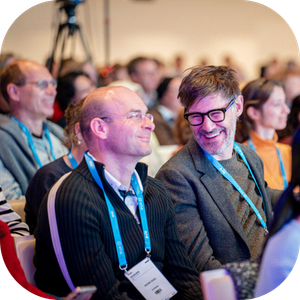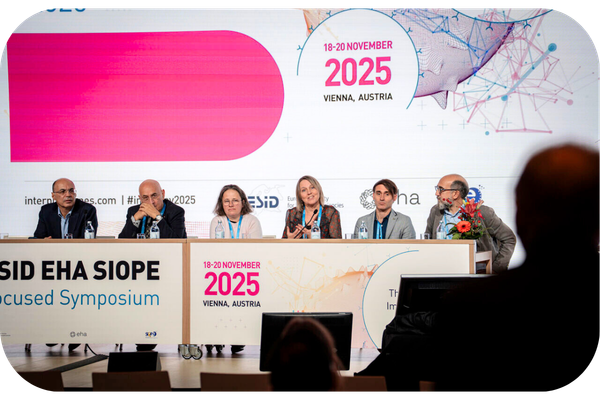
Vienna, Austria – November 2025 – ESID EHA SIOPE Focused Symposium 2025 Sets a New Benchmark for Multidisciplinary Collaboration in Immunology, Haematology and Paediatric Oncology
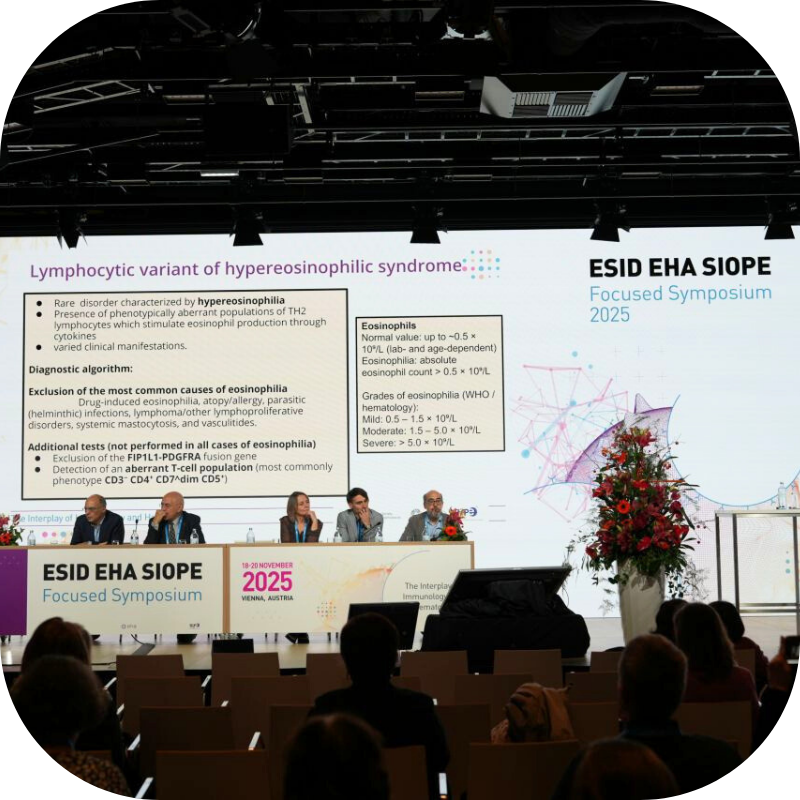 A new chapter in multidisciplinary medical collaboration was started as the ESID EHA SIOPE Focused Symposium 2025 concluded in Vienna. It brought together three major European societies – The European Society for Immunodeficiencies (ESID), The European Hematology Association (EHA), and The European Society for Paediatric Oncology (SIOPE) – to address the rapidly evolving intersection of immunodeficiencies, haematology, and paediatric oncology.
Held on 18-20 November, the meeting united 800 participants and delivered what many attendees described as “the cross-disciplinary meeting we have needed for years.”
The community breakdown underscored the event’s intentional diversity: 40% immunologists, 20% paediatric haematology-oncologists, 15% haematologists, 10% paediatricians, and a wide range of other specialists whose work overlaps with the complex reality of immune-related haematological disease.
A Meeting That Lived the Collaboration It Advocated
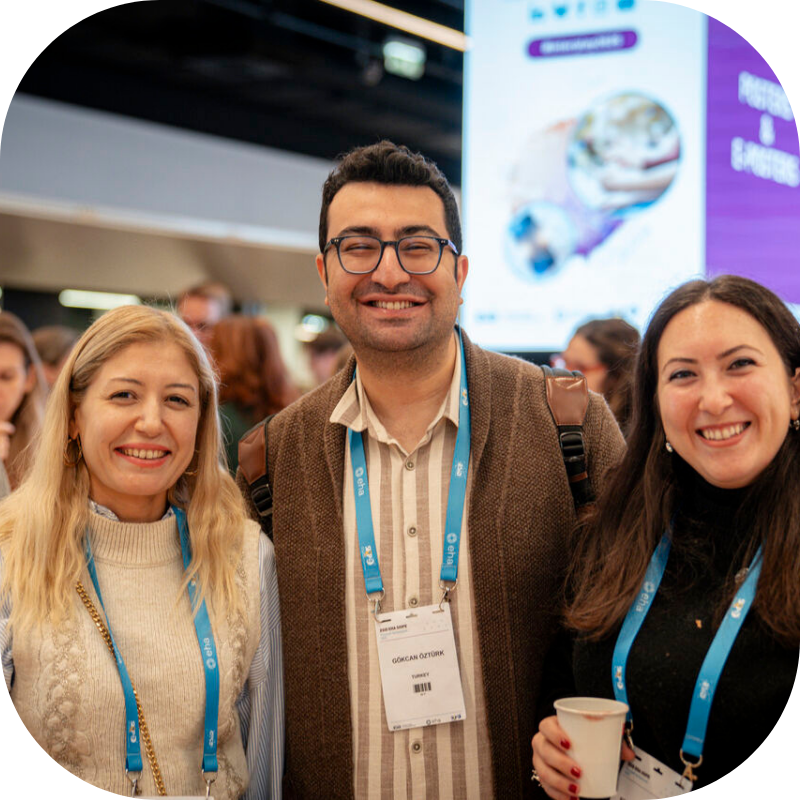 The symposium was born from a shared recognition by ESID, EHA, and SIOPE that modern patient care, particularly in rare diseases with immunodeficiencies and haematologic or oncologic manifestations, no longer sits neatly within traditional speciality boundaries.
Rather than simply calling for collaboration, the organising societies structured the meeting to live it: integrated sessions, cross-speciality case discussions, panel debates, and an educational day designed around real-world diagnostic and management challenges.
And the approach resonated. Discussions were described as energising and impactful, with clinicians highlighting how new shared understanding will translate into better diagnostic precision and multidisciplinary patient management.
Participants said about the meeting:
“Combining immunology and haematology helps us decode complex cases and guide families toward the right diagnosis sooner.”
“I’m excited to bring this new knowledge back to my clinical practice, especially in recognising nuances that may point toward inborn errors of immunity.”
A recurring theme was the value of recognising immune dysregulation earlier, particularly in presentations that traditionally fall under haematology or oncology.
Societies Signal Towards Future Collaboration
All three organising societies echoed the sense that the meeting achieved what it set out to do and more.
ESID
“It’s special when a focused meeting fulfils its aims extremely well. This was a truly cross-disciplinary event where we could learn from one another, network, and build those collaborations that are usually only found inside one’s speciality. It was exactly the type of meeting that benefits patients.”
SIOPE
“This symposium has shown how powerful collaboration can be in paediatric care. By bringing together our different specialties, we can reach a more complete diagnosis faster and improve the long-term outcomes for children with rare diseases. It’s an exciting step toward a brighter future for these patients.”
EHA
“We look forward to exploring whether we can repeat this experience in the future and transform the meeting into a platform of collaboration between the three societies and the different specialists working in the field, including all others engaged in ‘the interplay’.”
Kenes Group: From Vision to Execution
Behind the scenes, the collaboration was supported by Kenes Group, the professional congress organiser that helped shape the symposium.
Ira Hajdamacha, Director Client Accounts at Kenes, highlighted the strength of the partnership:
“It has been a pleasure to turn ESID’s vision, shared wholeheartedly by EHA and SIOPE, into reality. Through close partnership, we created a scientific environment where the societies could focus on the science and patients, while we focused on enabling it.”
Momentum Already Building for a 2027 Edition?
Even before the meeting closed, conversations were bubbling with anticipation for a follow-up, noting that the progress made in Vienna is only the beginning of what this collaboration can achieve. For many, Vienna 2025 wasn’t simply another conference; it was the foundation of a movement toward integrated thinking and shared practice in caring for some of their most complex patients.
For more information visit https://interplay.kenes.com/