
Background
UNLOK Education is an online learning experience platform pioneered by Kenes Group. Designed to support outcome-driven Independent Medical Education and Continuing Medical Education, UNLOK combines educational strategy, adult learning theory, and digital innovation to help healthcare professionals develop knowledge, skills, and competencies that translate into improved patient care. As a Trusted Provider of the European Accreditation Council for Continuing Medical Education and a member of the Good CME Practice Group, UNLOK operates with a strong commitment to quality, transparency, compliance, and accessibility. Its interactive learning portals connect healthcare professionals with education leaders worldwide, delivering accredited, ethically compliant content through personalised and engaging digital environments.

Overview
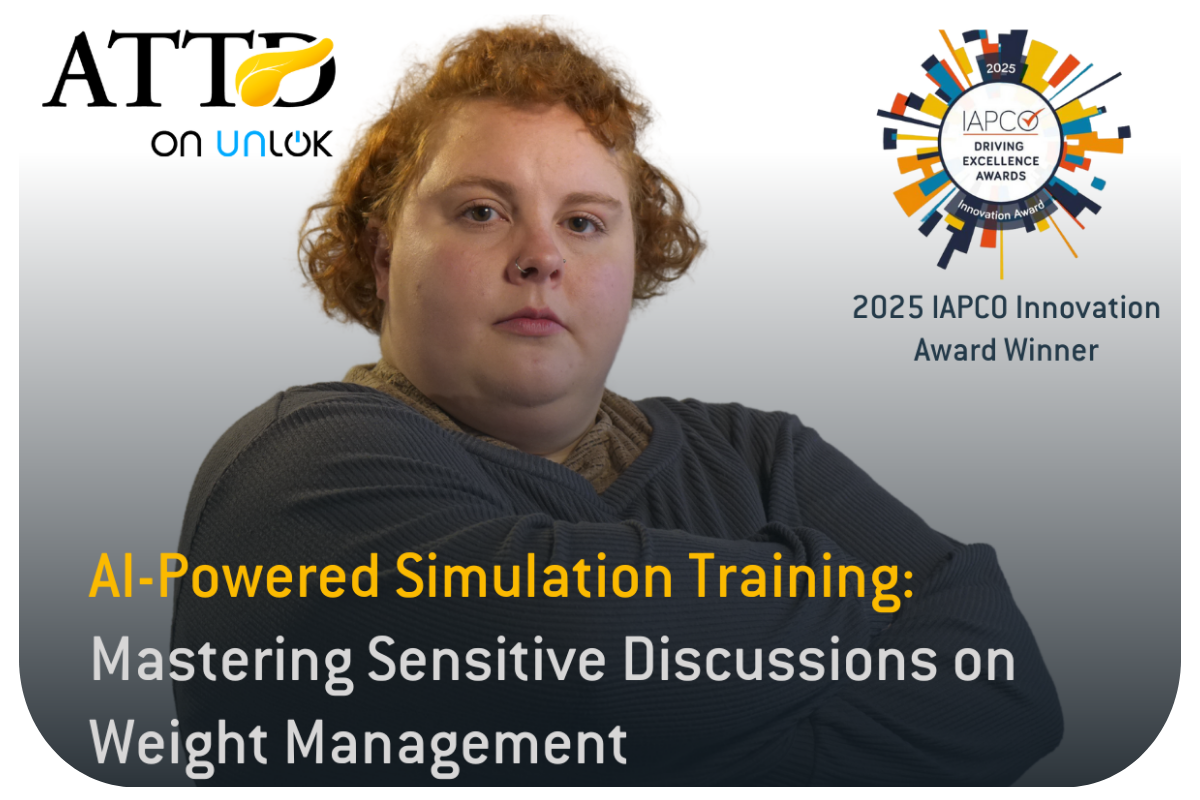
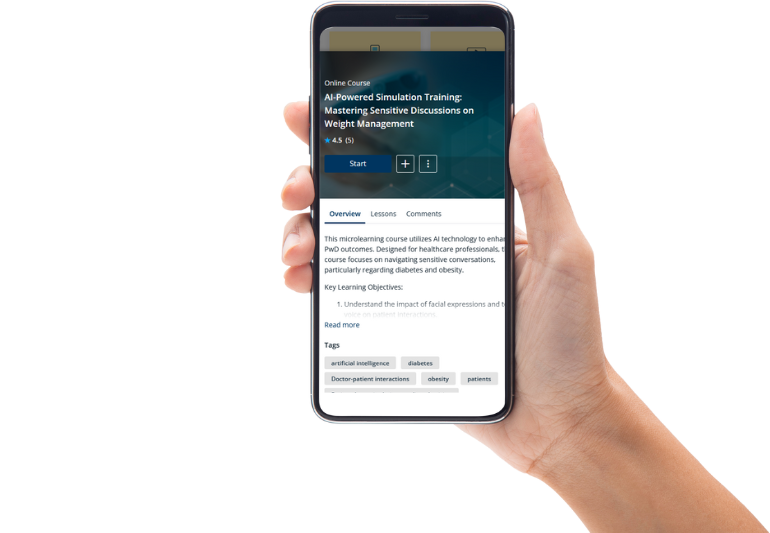
In an effort to advance human-centred medical education, Kenes Group developed The AI-Powered Simulation Training: Mastering Sensitive Discussions on Weight Management, a groundbreaking AI-driven learning experience designed to help healthcare professionals practise sensitive patient conversations related to diabetes and weight management. The course combines emotional recognition technology, realistic scenario design, and expert clinical guidance to create an immersive simulation that strengthens empathy, communication skills, and emotional intelligence in clinical practice.
Objectivesand Goals
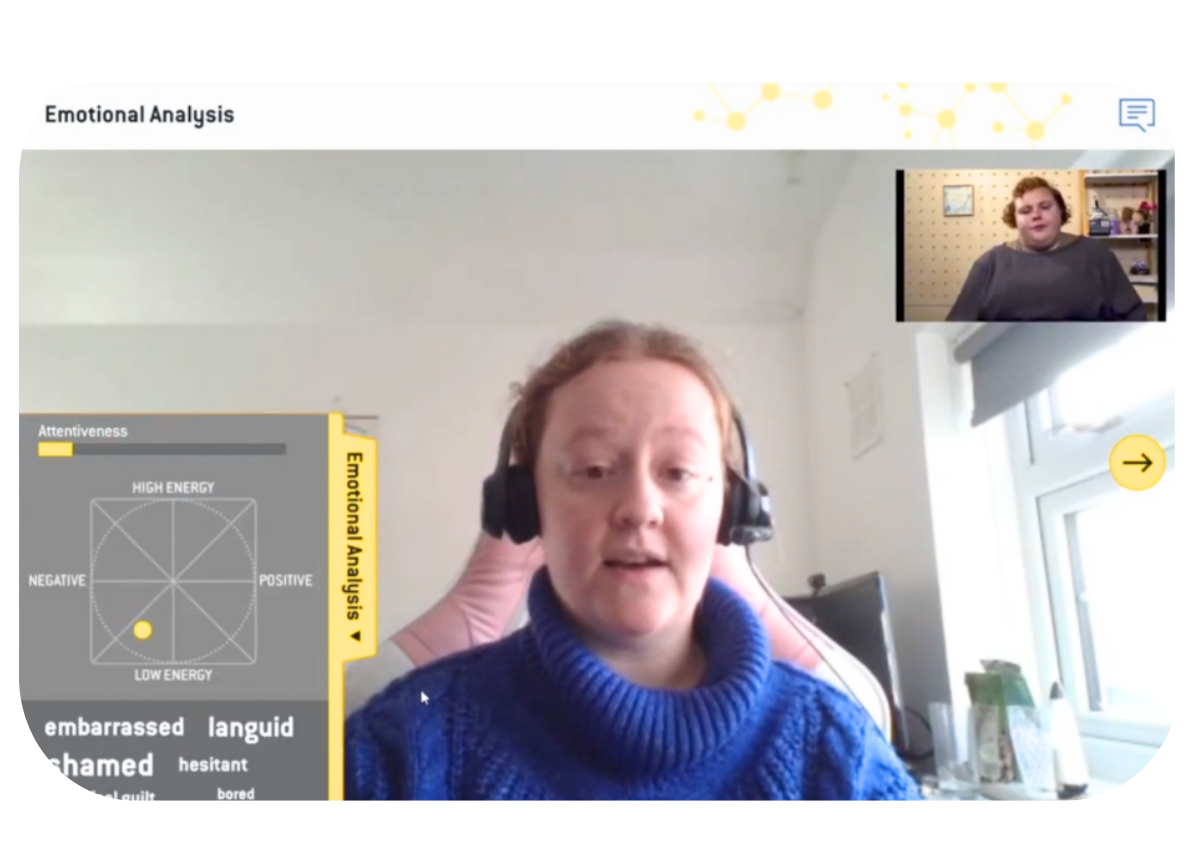
The primary goal was to create a realistic and emotionally intelligent training activity that would help clinicians navigate complex patient interactions with greater confidence and compassion. The project aimed to achieve this by integrating advanced emotional recognition AI capable of analysing tone, language, and facial cues to provide personalised feedback.
For Kenes Group, the initiative supported a broader mission to push the boundaries of digital medical education. We wanted to demonstrate that innovation could improve not only clinical knowledge but also the communication skills that shape patient trust and outcomes.
Building on the success of the UNLOK platform, the project reinforced the organisation’s leadership in developing transformative learning experiences.
Success was defined as delivering an interactive simulation that felt authentic to healthcare professionals, was endorsed by subject matter experts, and demonstrated clear engagement and value to the diabetes community.
Challenges and Problems
The team began with three central challenges. The first was ensuring that the emotional recognition AI provided accurate, meaningful insights without producing misleading feedback. The second involved training the system to interpret verbal and non-verbal communication in a way that aligned with real-world clinical practice. The third challenge was casting an actress who could convincingly portray a patient navigating the emotional weight of diabetes and sensitive health discussions.
These challenges quickly became the project’s top priorities, as early prototypes showed that the quality of the interaction would determine the credibility and usefulness of the simulation.
Solutions and Approach
To address these challenges, the development team conducted extensive AI training using carefully curated emotional and linguistic cues. Close collaboration with subject matter experts ensured that scenarios reflected the nuances of actual patient encounters. Selecting a skilled actress capable of delivering subtle and authentic emotional responses elevated the realism of the simulation.
The project introduced several innovative approaches. Emotional recognition AI in soft-skills medical training is still rare, and this simulation went beyond traditional e-learning by analysing live user behaviour to offer tailored feedback. The focus on communication, empathy, and emotional awareness represented a significant shift from typical medical education, which often centres on clinical content.
Execution and Implementation
Kenes Group led the learning design by defining the educational objectives and user experience. The development process involved immersive learning specialists, studio teams, a professional actress, clinical experts, and partners from Make Real, an award-winning immersive technologies developer specialising in simulation-based learning. Together, they created a fictional patient story and filmed multiple interactive scenarios.
The final simulation integrated emotional recognition technology and generative AI to analyse the learner’s language and expressions and was launched on the UNLOK portal, providing a safe and repeatable environment for clinicians to practice constructive communication.
Progress was measured through AI performance testing, user trials with healthcare professionals, expert validation, and engagement tracking throughout the rollout.
Outcomes and Results
The project saw strong adoption, with more than 350 healthcare professionals registering for the course. Participant feedback highlighted how engaging, realistic, and thought-provoking the experience was. Key opinion leaders praised the project as a progressive example of technology enhancing human-centred skills in healthcare.
All initial objectives were met. The simulation provided actionable personalised feedback, delivered an emotionally authentic experience, and achieved measurable engagement. The success of the project further strengthened Kenes Group’s position as an innovator, contributing to the organisation winning the IAPCO Innovation Award for the second time.
Conclusion
This project demonstrated that medical education can be transformed when technology is used to make learning more human. Empathy, communication, and emotional intelligence are essential parts of patient care, and AI can support these skills when implemented responsibly and thoughtfully.
The key lessons include the importance of measuring learner behaviour, collaborating with clinical and creative experts, and designing experiences that reflect real patient emotions. When innovation is guided by authenticity and purpose, it has the power to elevate both professional development and the quality of care patients receive.